

ROC annual filing 2026: Pvt Ltd & LLP compliance, explained simply
TL;DR: Every private limited company and LLP in India must file annual returns with the Registrar of Companies (ROC) — even with zero revenue. Companies file AOC-4 (by ~30 Oct), MGT-7 (by ~29 Nov), plus DIR-3 KYC (30 Sep), DPT-3 (30 Jun), and hold an AGM by 30 Sep. LLPs file Form 11 (30 May) and Form 8 (30 Oct). Late fees are brutal: ₹100/day with no cap, and a deactivated DIN. Here's the whole picture.
Why ROC filing matters even if you made no money
A common and expensive myth: "We're pre-revenue, so we don't have filings." Wrong. ROC compliance is tied to existence, not income. A dormant company with zero transactions still owes AOC-4, MGT-7, DIR-3 KYC and an AGM. Skip them and:
- late fees accrue at ₹100/day per form, with no maximum;
- directors' DINs get deactivated;
- the company can be flagged and eventually struck off;
- directors can be disqualified for 5 years after 3 years of default.
Private Limited Company — the annual stack
The AGM comes first
Hold your Annual General Meeting within 6 months of the financial year end — by 30 September for a March year-end. The AGM adopts the accounts, and the AOC-4/MGT-7 clocks start ticking from the AGM date.
AOC-4 — financial statements
File your audited financial statements with the ROC within 30 days of the AGM — so ~30 October for a 30 September AGM.
MGT-7 — annual return
File the company's annual return (shareholding, directors, etc.) within 60 days of the AGM — so ~29 November.
DIR-3 KYC — director KYC
Every person holding a DIN must file DIR-3 KYC by 30 September. Miss it and the DIN is deactivated and reactivation costs ₹5,000.
DPT-3 — return of deposits
An annual return of deposits and outstanding loans as at 31 March, due 30 June.
ADT-1 — auditor appointment
A one-time filing (within 15 days of appointing the statutory auditor at the AGM; the first auditor within 30 days of incorporation).
| Company form | What it is | Due date (Mar year-end) |
|---|---|---|
| AGM | Annual general meeting | 30 September |
| DIR-3 KYC | Director KYC | 30 September |
| DPT-3 | Return of deposits/loans | 30 June |
| AOC-4 | Financial statements | ~30 October (30 days post-AGM) |
| MGT-7 | Annual return | ~29 November (60 days post-AGM) |
| ADT-1 | Auditor appointment | Within 15 days of AGM |
LLP — a lighter but different stack
LLPs don't hold AGMs or file AOC-4/MGT-7. They file:
| LLP form | What it is | Due date |
|---|---|---|
| Form 11 | Annual return | 30 May |
| Form 8 | Statement of account & solvency | 30 October |
| DIR-3 KYC | KYC of designated partners | 30 September |
⚠️ LLP late fees are especially punishing — ₹100/day per form with no cap — and LLPs are often worse at remembering because there's no AGM ritual to anchor the year.
Penalties, in one place
| Filing | Late fee |
|---|---|
| AOC-4 / MGT-7 | ₹100 per day, no maximum |
| LLP Form 11 / Form 8 | ₹100 per day, no maximum |
| DIR-3 KYC | ₹5,000 + DIN deactivated |
| DPT-3 | ₹100/day + potential company/officer penalties |
Because there's no cap on the ₹100/day forms, a filing forgotten for a year can cost ₹36,500 — per form. This is the single most expensive category of small-business compliance to ignore.
Why ROC deadlines get missed
- They're once a year, so there's no muscle memory.
- The dates are relative to the AGM, not fixed — people miscalculate.
- Different rules for companies vs LLPs cause mix-ups.
- Founders assume the CA "has it handled" — until nobody confirmed the AGM date.
How Smart Dhandha keeps ROC on track
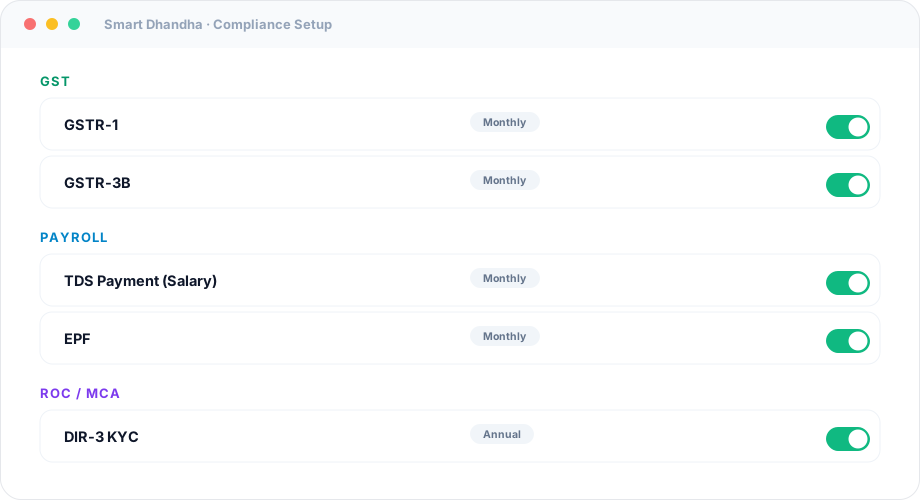
1. It knows you're a company or an LLP. Set your entity type once in Settings → Company, and Smart Dhandha loads the correct stack — AOC-4/MGT-7/DIR-3 KYC/DPT-3 for companies, Form 11/Form 8 for LLPs — and hides what doesn't apply.
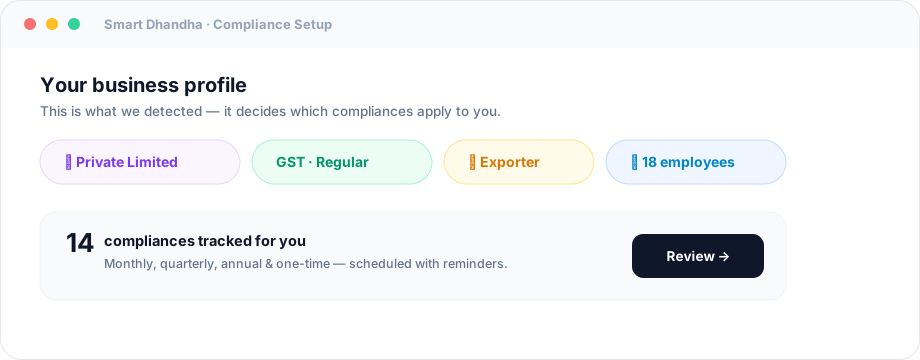 2. Long-lead reminders. ROC filings carry reminders at 30, 15, 7 and 1 day before their due dates — because a once-a-year deadline needs a nudge weeks in advance, not the night before.
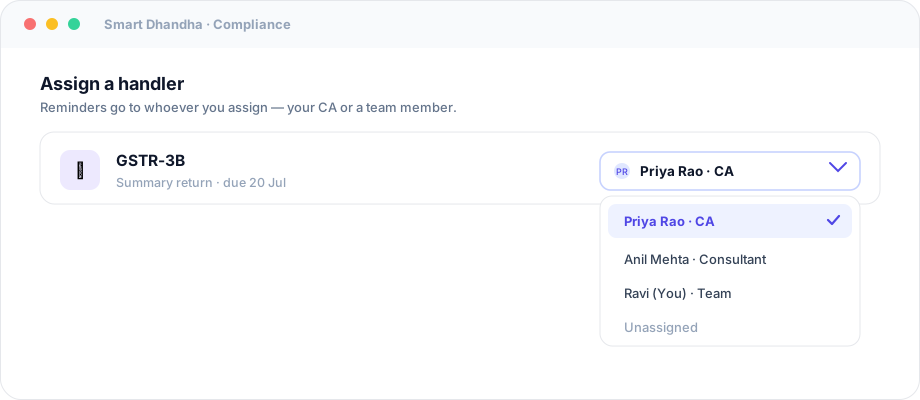
3. Assign your Company Secretary or CA. Route each ROC filing to the professional who files it, so they get the reminder directly and you can see it's handled.
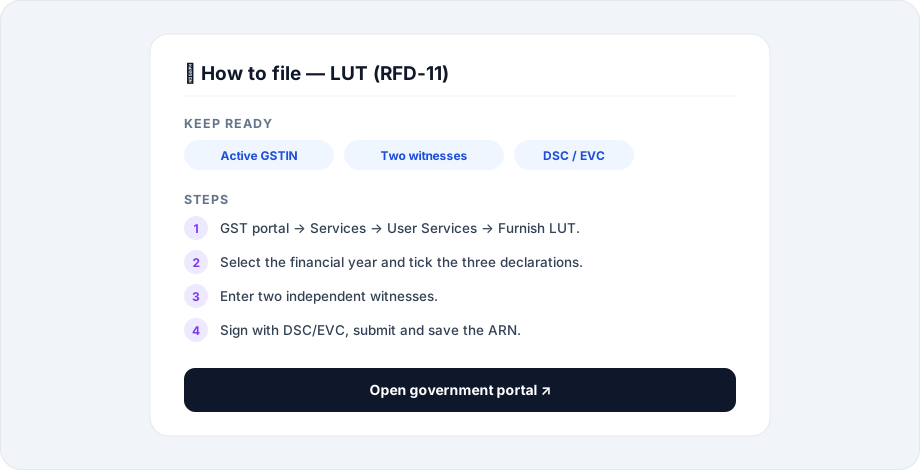
 4. Guides for the confusing ones. Open the guide on DIR-3 KYC and you get the steps, the documents (DIN, PAN, Aadhaar, DSC), and the MCA portal link — so a missed KYC never costs you ₹5,000 again.
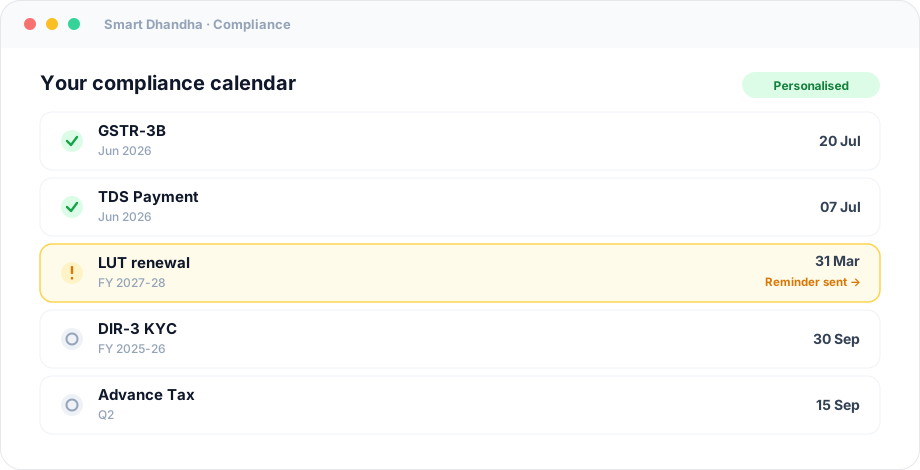
 5. It's all on one calendar. Your ROC deadlines sit alongside GST, TDS and income tax in a single 12-month calendar, so nothing lives in a separate silo you forget to check.
Frequently asked questions
What is the difference between AOC-4 and MGT-7?
AOC-4 files your financial statements with the ROC (due within 30 days of the AGM). MGT-7 is the company's annual return — details of shareholders, directors and capital (due within 60 days of the AGM).
Do I have to file ROC returns if my company had no business?
Yes. ROC filings are mandatory for every registered company regardless of turnover — even a dormant, zero-revenue company must file AOC-4, MGT-7, DIR-3 KYC and hold an AGM.
When is DIR-3 KYC due and what if I miss it?
It's due 30 September. Miss it and your DIN is deactivated and reactivation requires paying a ₹5,000 fee.
What are the ROC due dates for a private limited company?
For a March year-end: AGM and DIR-3 KYC by 30 Sep, DPT-3 by 30 Jun, AOC-4 ~30 Oct (30 days post-AGM), MGT-7 ~29 Nov (60 days post-AGM).
What does an LLP have to file annually?
Form 11 (annual return) by 30 May, Form 8 (statement of account & solvency) by 30 October, and DIR-3 KYC for designated partners by 30 September.
What's the penalty for late ROC filing?
₹100 per day with no maximum limit for AOC-4, MGT-7 and the LLP forms — which is why a forgotten filing can run into tens of thousands of rupees.
Don't let a ₹100/day form become a ₹36,500 mistake
ROC filings are annual, entity-specific, and uncapped in penalty — the perfect storm for expensive slip-ups. A system that knows your entity and reminds you weeks ahead is the cheapest insurance you can buy.
Set up your ROC calendar free → — and see every FY 2026-27 due date in one place.
General information as of July 2026; MCA rules and forms change — confirm with your CA/CS or MCA. Sources: MCA, ClearTax — ROC compliance calendar.