

Startup compliance calendar FY 2026-27: every important due date
TL;DR: Running a business in India means juggling monthly (GST, TDS, PF/ESI), quarterly (TDS returns, advance tax), and annual (income tax, GST annual return, ROC) deadlines — each with its own portal and penalty. This is the full FY 2026-27 calendar in plain English. Bookmark it, or better, let Smart Dhandha generate a calendar personalised to your business so you only ever see the dates that actually apply to you.
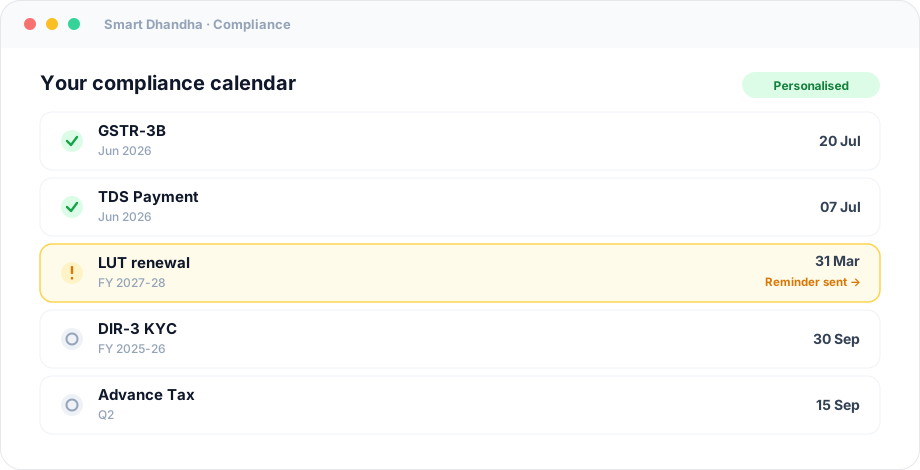
The 6 compliance buckets every founder should know
- GST — monthly/quarterly returns + an annual return.
- TDS — monthly deposits + quarterly returns.
- Payroll — PF, ESI, Professional Tax.
- Income tax — advance tax + the annual return.
- ROC / MCA — annual filings for companies and LLPs.
- One-time & annual registrations — LUT, Udyam, DIR-3 KYC, and more.
Not all apply to everyone. A solo proprietor with no employees has a very different list from a funded Pvt Ltd with a team of 20. That's the whole point of a personalised calendar (more below).
Monthly deadlines (the recurring drumbeat)
| Date | Compliance | Who |
|---|---|---|
| 7th | TDS/TCS deposit for the previous month | Anyone who deducts TDS |
| 11th | GSTR-1 (outward supplies) | Regular GST, monthly filers |
| 15th | PF (ECR) and ESI contribution | Employers with PF/ESI |
| 20th | GSTR-3B (summary return + tax) | Regular GST, monthly filers |
| Varies | Professional Tax | Employers in PT states |
⚠️ The March exception: TDS deducted in March can be deposited by 30 April (not 7 April). It's the one exception to the 7th-of-next-month rule.
QRMP note: GST-registered businesses under ₹5 crore turnover can opt into QRMP and file GSTR-1/GSTR-3B quarterly instead. GSTR-1 (quarterly) is due the 13th after the quarter; GSTR-3B (quarterly) the 22nd or 24th depending on your state.
Quarterly deadlines
| Due | Compliance | Notes |
|---|---|---|
| 15 Jun / 15 Sep / 15 Dec / 15 Mar | Advance Tax installments | If yearly tax liability exceeds ₹10,000 |
| 31 Jul / 31 Oct / 31 Jan / 31 May | TDS returns (24Q salary, 26Q non-salary) | Q4 (Jan–Mar) is 31 May, not 30 Apr |
| 18th after quarter | CMP-08 | Composition dealers only |
⚠️ The 31 May trap: Q1–Q3 TDS returns are due at month-end after the quarter, but Q4 is due 31 May — a full month later. Miss the shift and you either file early in a panic or late with a ₹200/day fee under Section 234E.
Annual deadlines
| Due | Compliance | Who |
|---|---|---|
| 31 March | LUT (RFD-11) renewal | GST-registered exporters — full LUT guide |
| 30 May | LLP Form 11 (annual return) | LLPs |
| 15 June | Form 16 to employees | Employers who deducted salary TDS |
| 30 June | DPT-3 (return of deposits) | Companies |
| 30 June | GSTR-4 (composition annual) | Composition dealers |
| 15 July | FLA return (RBI/FEMA) | Companies/LLPs with foreign investment |
| 31 July | Income Tax Return (non-audit) | Most businesses; audit cases 31 Oct |
| 30 Sep | DIR-3 KYC (director KYC) | Everyone with a DIN/DPIN |
| 30 Sep | AGM (annual general meeting) | Companies |
| 30 Oct | LLP Form 8 (accounts & solvency) | LLPs |
| 30 Oct | ROC AOC-4 (financial statements) | Companies — within 30 days of AGM |
| 29 Nov | ROC MGT-7 (annual return) | Companies — within 60 days of AGM |
| 31 Dec | GSTR-9 / GSTR-9C (GST annual return) | Regular GST above turnover thresholds |
What applies to your business?
Here's the same calendar, filtered by who you are:
Proprietorship, no employees, GST-registered (regular): GSTR-1 (11th), GSTR-3B (20th), advance tax (quarterly), ITR (31 Jul), GSTR-9 (if above threshold). That's roughly it.
Private Limited, 15 employees, GST-registered: All of the above plus TDS deposit (7th) & returns (24Q/26Q), PF/ESI (15th), Professional Tax, Form 16, and the ROC stack — AOC-4, MGT-7, DIR-3 KYC, DPT-3, AGM.
Service exporter (agency/SaaS): The GST + income-tax core plus the annual LUT (so you invoice foreign clients without IGST), and IEC if you haven't already.
LLP: GST/TDS/income-tax core plus LLP Form 11 and Form 8, and DIR-3 KYC for designated partners.
Trying to remember which subset is yours — and every date within it — is exactly where founders slip.
The problem with a static calendar (like this one)
A blog table is a great reference, but it can't:
- know your entity type, GST scheme, or whether you export;
- remind you 7 days before a specific due date;
- track what you've filed vs. what's pending;
- route a filing to your CA and confirm it's done.
That's the difference between a calendar you read and a system that runs.
How Smart Dhandha turns this into an automatic system
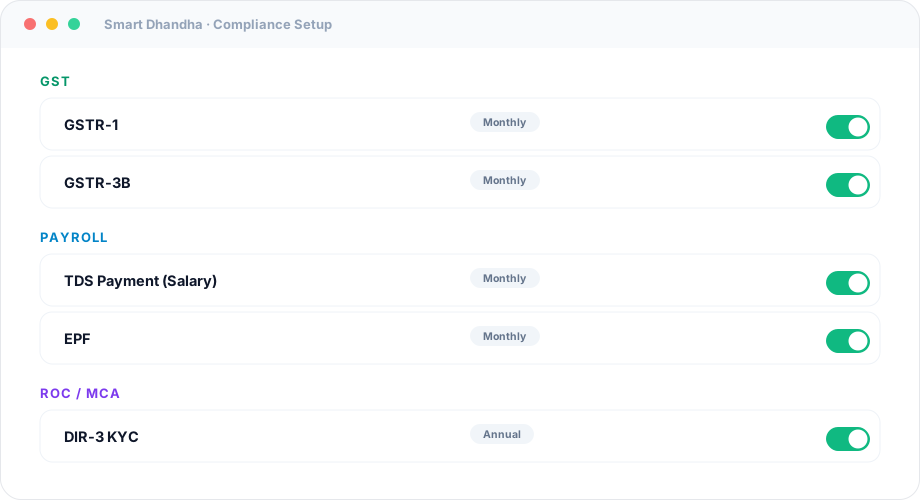
1. Answer a few profile questions once. In Settings → Company you set your entity type, GST scheme (regular/composition), whether you have employees, whether you export, and PF/ESI/PT. Those answers drive everything.
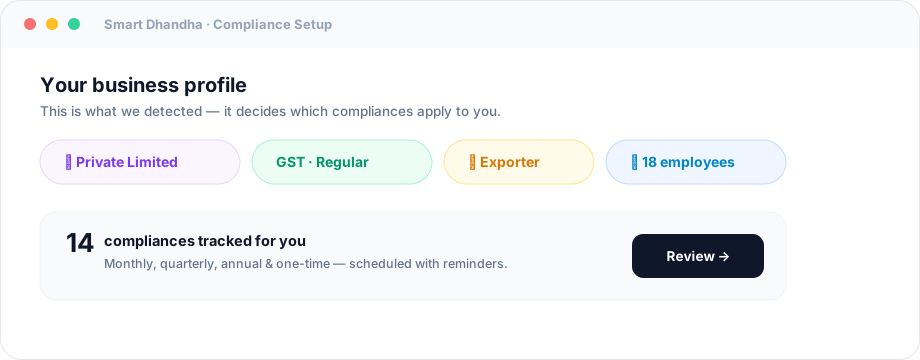 2. Smart Dhandha builds your calendar. It generates only the compliances that apply, on the correct dates — QRMP-aware, entity-aware (companies get 31 Oct ITR automatically), and with the Q4-TDS 31 May shift handled for you.
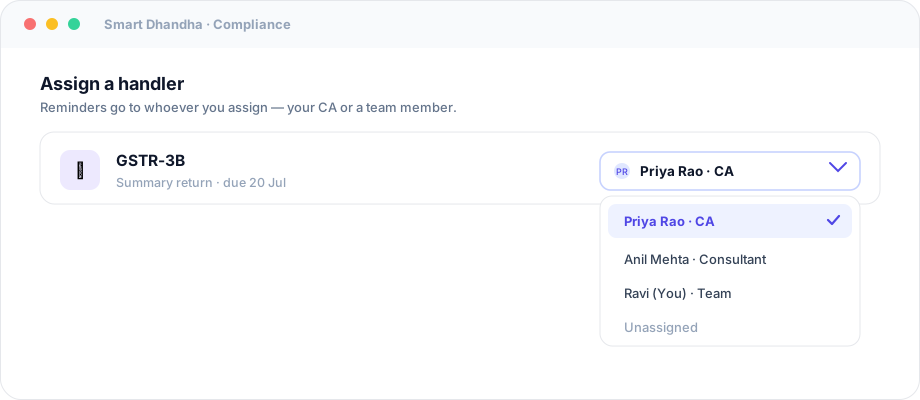
3. It reminds the right person. Each filing carries reminders (e.g. 15/7/3/1 days before) sent to you and the CA or team member you assign as its handler.
 4. It recommends what you're missing. Marked yourself as an exporter but haven't set up the LUT? It shows up under "Recommended for you." New to needing PF? Same. The system nudges instead of waiting for you to know.
5. It shows you how to file each one. Every major compliance has a built-in guide — steps, documents, and a link to the government portal — so you can act or hand a precise checklist to your CA.
Frequently asked questions
What are the most important monthly compliance dates in India?
For most businesses: TDS deposit by the 7th, GSTR-1 by the 11th, PF & ESI by the 15th, and GSTR-3B by the 20th of the following month.
When is the TDS return due for Q4?
The Q4 (January–March) TDS return is due 31 May — a month later than the other quarters, which are due at the end of the month following the quarter.
Do small businesses really need to track all of this?
You only need to track what applies to you. A proprietor with no staff has a handful of dates; a company with employees has many more. A personalised tracker shows only your subset so you're not drowning in irrelevant deadlines.
What's the penalty for missing compliance deadlines?
It varies: ₹50–200/day late fees for GST and TDS returns, ₹100/day (no cap) for ROC forms like AOC-4 and MGT-7, ₹5,000 for late DIR-3 KYC, and interest on late tax payments. Small misses add up fast.
Can I manage compliance without a full-time CA?
Yes — for tracking, reminders and knowing what to file. Many founders use Smart Dhandha to stay on top of the calendar and still hand the actual filing to a CA, now with a clear, assigned checklist instead of last-minute chaos.
Stop missing dates
You don't need to memorise this calendar. You need a system that knows your business and reminds you (and your CA) before each date.
Build your personalised compliance calendar free → — then compare it with the best compliance tools in India.
Rules and dates reflect FY 2026-27 as of July 2026 and can change with notifications/extensions — always confirm with your CA or the official portals. Sources: ClearTax GST calendar, TaxGuru compliance calendar FY 2026-27, Income Tax portal, MCA.